
Vous possédez un compte ?
Connectez-vous pour payer plus vite.
30 les gens regardent ça en ce moment
🚚 Livraison gratuite sur les commandes de plus de 150 $ dans certaines villes
🔥 18 vendus cette semaine
📦 Retours sous 14 jours
Disponibilité: En stock
Impossible de charger la disponibilité du service de retrait


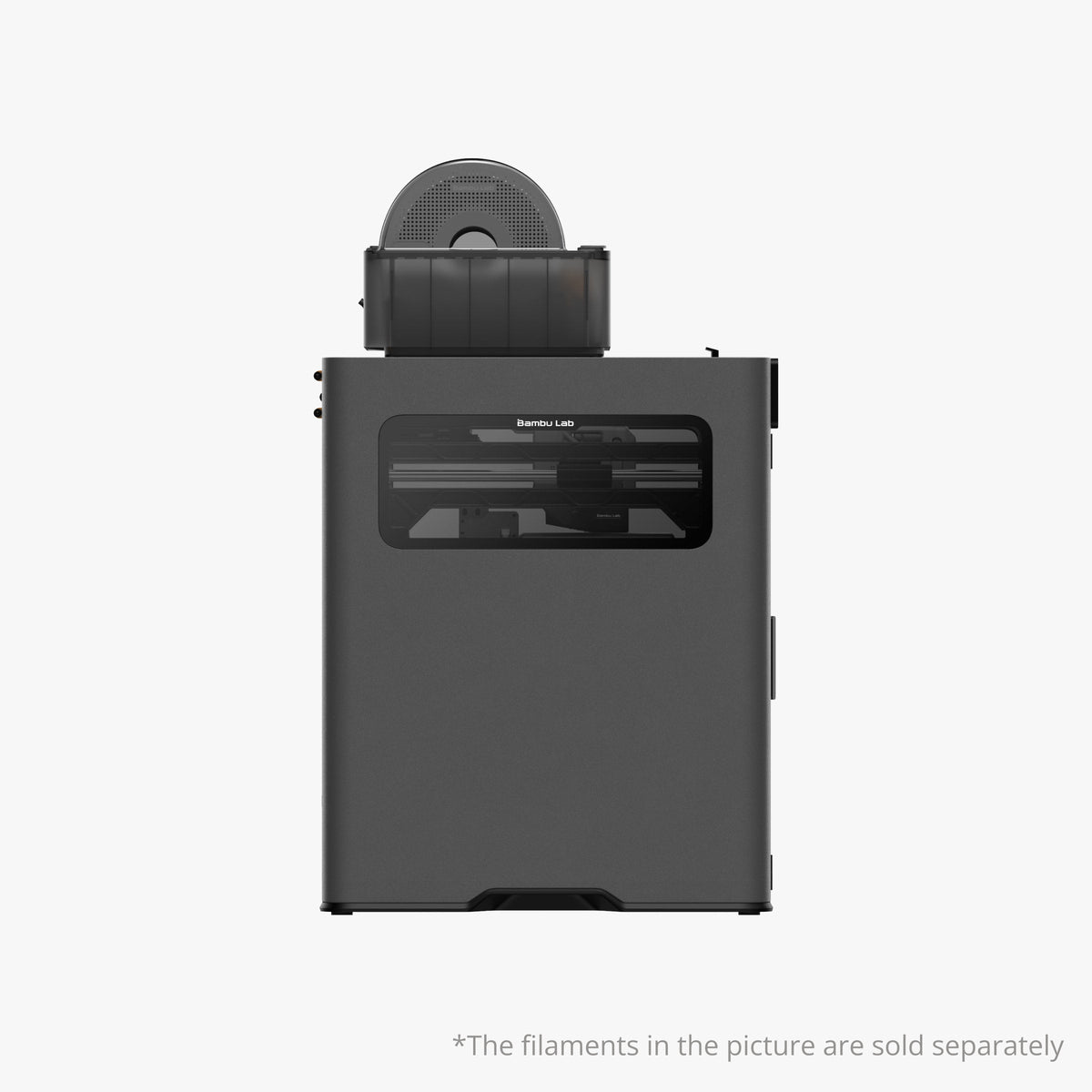
Le Bambu Lab H2C 10W Laser Full Combo est un système d’impression 3D multi-matériaux conçu pour produire des pièces complexes, multicolores et multi-matériaux avec moins de déchets de purge, moins d’intervention manuelle et un meilleur contrôle du processus. Il combine le système de changement de hotend Vortek, une capacité d’impression à haute température, un étalonnage automatisé, une surveillance assistée par IA et des fonctions optionnelles de laser et de découpe dans une seule plateforme fermée.
Le H2C est conçu pour les utilisateurs qui souhaitent des pièces intégrées plutôt que des modèles peints, collés ou assemblés. Son approche de changement de hotend permet une impression en six couleurs, plus une septième buse pour le support ou une couleur supplémentaire, et il peut imprimer jusqu’à sept matériaux différents en une seule session.

L’impression multicolore sur le H2C réduit le besoin de post-traitement sur les modèles complexes. La peinture peut être remplacée par une impression directe des couleurs, y compris des pièces en six couleurs avec une buse supplémentaire disponible pour le support ou un autre canal de couleur.
L’exemple présenté comprend un projet imprimé en 2 parties, où le raptor principal est en 6 couleurs et la base est également en 6 couleurs.

Le H2C peut combiner différentes propriétés de matériaux dans une seule impression sans nécessiter de purge de la buse entre chaque changement de matériau. Cela le rend adapté aux assemblages fonctionnels, aux combinaisons souples-rigides et aux composants intégrés qui nécessiteraient autrement une fabrication et un assemblage séparés.


L’imprimante prend en charge des articulations TPU intégrées pour les pièces multicolores, permettant aux utilisateurs d’imprimer directement des rotules flexibles dans des modèles de robots et d’autres assemblages articulés. Le résultat est une structure d’articulation durable conçue pour des mouvements répétés.


Le système Vortek réduit les déchets de purge en remplaçant l’ensemble du hotend lors des changements de matériau, au lieu de nettoyer une seule buse entre les filaments. Les changements sont ainsi plus rapides et plus propres, tout en préservant la qualité d’impression lors des transitions de couleur et de matériau.

Lorsqu’il est associé au Bambu Lab AMS, le système automatise le processus de changement de filament, de sorte que les utilisateurs n’ont pas besoin de charger manuellement chaque filament dans la tête d’impression à chaque transition.
Chaque hotend peut enregistrer les informations sur le filament dans sa mémoire, ce qui permet à la H2C d’associer automatiquement les matériaux aux hotends correctes. Lorsque plus de sept types de filament sont utilisés, l’imprimante calcule la combinaison la plus efficace afin de նվազimiser les déchets de purge.
Comme le système ne remplace que la hotend, il peut accueillir jusqu’à six hotends remplaçables sans réduire de manière significative le volume d’impression de 330 × 320 × 325 mm³. Cela permet davantage de couleurs et d’options de matériaux dans un format compact.

Le chauffage par induction amène la buse à température en 8 secondes, sur la base de la température d’impression du Bambu PLA Basic. Un préchauffage plus rapide aide à réduire les temps d’arrêt lors des changements de hotend par rapport aux méthodes de chauffage traditionnelles.
Le H2C utilise une conception de connexion sans contact au lieu de broches métalliques avec contact qui peuvent s’oxyder et entraîner des connexions instables. Cette connexion haute fréquence prend en charge un contrôle stable de la température et une synchronisation intelligente de la tête d’impression.

Les imprimantes traditionnelles à changeur d’outils sont souvent limitées par le nombre de têtes d’impression installées. Le H2C peut prendre en charge jusqu’à 24 matériaux dans une seule impression grâce à des unités AMS connectées en parallèle, avec un algorithme d’allocation qui optimise l’attribution des matériaux aux têtes d’impression afin de réduire le gaspillage.

Le châssis fermé et le système de circulation d’air adaptatif aident à maintenir un environnement de chambre stable pour une impression haute performance. Le système filtre également l’air afin de contribuer à un espace de travail plus propre et plus sûr.

L’étalonnage inductif du décalage de buse est entièrement automatique et ne nécessite aucune étape manuelle, plaque d’étalonnage ni configuration supplémentaire. L’imprimante calibre le décalage de buse avec une précision de 25 microns en quelques minutes.
Les utilisateurs peuvent consacrer l’un des six hotends interchangeables à des matériaux spécifiques, y compris des filaments techniques de grande valeur. Cela améliore la constance et la fiabilité, tandis que les données de filament enregistrées permettent d’associer automatiquement les chargements futurs au bon hotend.

L’extrudeuse servo PMSM délivre jusqu’à 10 kg de force d’extrusion maximale, soit 70 % de plus qu’un moteur pas à pas. L’architecture servo propriétaire échantillonne la résistance et la position à 20 kHz afin de détecter activement en temps réel le broyage du filament et les obstructions.
Avec l’encodeur de vision en option, le H2C atteint une précision de mouvement indépendante de la distance inférieure à 50 μm. Le système compense la dérive mécanique pendant l’étalonnage afin de maintenir la précision dans le temps.
L’imprimante utilise le moteur servo de l’extrudeur avec des capteurs à courants de Foucault haute résolution sur la buse pour surveiller la dynamique d’extrusion. Cela permet un contrôle précis de l’extrusion et l’étalonnage automatique du paramètre Pressure Advance pour chaque filament.

La combinaison de buses à 350 °C et d’une chambre chauffée activement à 65 °C aide à réduire le gauchissement et la déformation tout en améliorant l’adhérence entre les couches lors de l’impression de filaments haute performance et haute température.


Le H2C utilise un ensemble de 59 capteurs sur le H2C Laser Edition entièrement équipé avec caméra Bird's Eye et 6 têtes d’impression chauffantes à induction, ainsi qu’un système de vision par ordinateur à quatre caméras et un algorithme neuronal propriétaire. Ensemble, ces systèmes fournissent des diagnostics intelligents en temps réel capables d’identifier des anomalies d’impression subtiles pendant l’avancement de l’impression.

Le système de caméra IA surveille en continu les motifs d’extrusion et détecte les accumulations de matériau, les déviations du filament et les échecs d’extrusion. Il effectue également une analyse préliminaire afin de vérifier un démarrage sécurisé avant le lancement de l’impression.


L’imprimante utilise un système de filtration en trois étapes composé d’un préfiltre G3, d’un filtre HEPA H12 et d’un filtre à charbon actif issu de coque de noix de coco. Cette combinaison est destinée à minimiser les odeurs et les particules nocives générées par les matériaux techniques.

La chambre est entièrement construite à partir de matériaux ignifuges pour une sécurité passive de l’enceinte. La chambre résistante au feu utilise des matériaux de grade UL94 V-0.

Le H2C prend en charge la connectivité cloud pour un contrôle à distance depuis n’importe quel appareil et prend également en charge un fonctionnement entièrement hors ligne pour les environnements nécessitant une isolation physique. Les utilisateurs peuvent faire fonctionner l’imprimante, envoyer des fichiers et mettre à jour le micrologiciel sans connexion Internet, tandis que le mode Développeur offre un accès au port MQTT pour l’intégration tierce.
Pour des raisons de sécurité, le mode Développeur ne peut pas être activé lors de l’utilisation des fonctions Laser et Cutting.

Toutes les données de temps d’impression et de déchets de purge affichées sont des résultats calculés par Bambu Studio.
Les fonctionnalités et avantages annoncés de Vortek sont basés sur l’utilisation complète de 6 hotends à induction du même diamètre et des unités AMS correspondantes.
Toutes les données produit du H2C sont basées sur les tests internes de Bambu Lab. Les résultats réels peuvent varier en raison des différences entre les produits, des habitudes des utilisateurs et des conditions environnementales.
Le Vision Encoder en option est requis pour l’amélioration de la précision des mouvements.
La compensation automatique des trous et des contours doit être activée dans Bambu Studio, et le filament Bambu désigné doit être utilisé.
La fonction de broyage du filament de l’extrudeur DynaSense est limitée par le type de filament.
« 59 capteurs » fait référence à la H2C Laser Edition entièrement équipée avec caméra Bird's Eye et 6 hotends à induction.
Les hotends à haut débit sont des équipements en option.
En raison du protocole de sécurité, le mode développeur ne peut pas être activé lors de l’utilisation des fonctions Laser et de découpe.
Les notifications push nécessitent Bambu Handy et une connexion au cloud.
Les projets de créateurs sont fournis à des fins d’illustration uniquement. Bambu Lab n’approuve pas et décline toute déclaration ou garantie concernant les projets de créateurs, y compris la sécurité, la commercialisation ou la convivialité de toute œuvre imprimée en 3D basée sur ces projets.
Le temps de chauffe de 8 secondes du hotend à induction est basé sur la température d’impression de Bambu PLA Basic.
L’affirmation « sans purge » n’inclut pas la purge initiale requise lors du chargement d’un filament neuf dans un hotend.
La chambre ignifuge est fabriquée à partir de matériaux de grade UL94 V-0.
Les crédits de projets mentionnés dans les documents originaux incluent : Geminaraptor par @FireBird(Sophie) ; Bambu Lab Racer par @Mr.Rod ; Blériot Rider - XI par @CrazyJN ; Heavy Second Core Mecha par @Kit Crafters ; Aero Mobius Drone Frame par @极尘悦 ; Multi-color Sneaker par @CloudBerry ; Gridfinity Anatomical Kidney par @Azrael ; Plant Cell par @suezou ; EV Charger par @Bambu Lab.
| Volume de construction | 330 × 320 × 325 mm³ |
| Température de la buse | Jusqu’à 350°C |
| Chambre chauffée active | 65°C |
| Capacité de l’extrudeur (hotend) | Jusqu’à 6 hotends remplaçables |
| Couleurs/Matériaux pris en charge par impression | Jusqu’à 7 directement dans une seule impression ; jusqu’à 24 matériaux dans une seule impression via des unités AMS connectées en parallèle |
| Temps de chauffage de la buse à induction | 8 secondes (d’après la température d’impression Bambu PLA Basic) |
| Précision d’étalonnage du décalage de la buse | Dans un rayon de 25 microns |
| Précision de mouvement | Moins de 50 μm avec encodeur Vision en option |
| Force d’extrusion maximale | Jusqu’à 10 kg |
| Taux d’échantillonnage du servo | 20 kHz |
| Nombre de capteurs | 59 capteurs sur la H2C Laser Edition entièrement équipée avec caméra Bird’s Eye et 6 hotends à induction |
| Filtration de l’air | Filtration en trois étapes : préfiltre G3, filtre HEPA H12, filtre au charbon actif à base de coque de coco |
| Catégorie des matériaux de la chambre | Matériaux ignifuges UL94 V-0 |
| Module laser/coupe | Module laser et découpe 10 W/40 W en option |
Avis
Aucun avis pour le moment — soyez le premier à en laisser un.


