
Vous possédez un compte ?
Connectez-vous pour payer plus vite.
23 les gens regardent ça en ce moment
🚚 Livraison gratuite sur les commandes de plus de 150 $ dans certaines villes
🔥 18 vendus cette semaine
📦 Retours sous 14 jours
Disponibilité: En stock
Impossible de charger la disponibilité du service de retrait
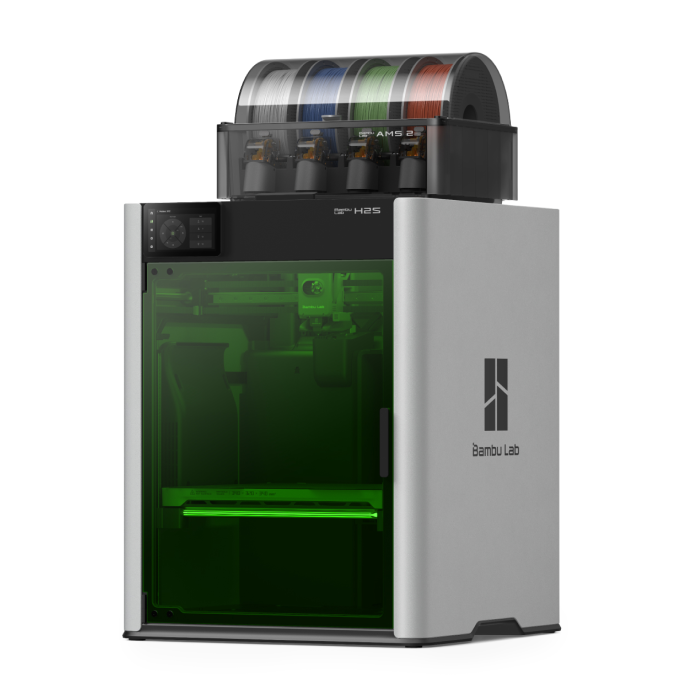
Le Bambu Lab H2S Laser Full Combo est un hub de fabrication personnelle grand format qui combine impression 3D, découpe laser, gravure et dessin sur une seule plateforme. Il est conçu pour offrir une grande précision dimensionnelle, prendre en charge des matériaux de qualité industrielle et automatiser davantage les tâches de configuration, de surveillance et de sécurité pendant l’utilisation.
Le H2S se positionne comme un hub de fabrication personnelle incontournable pour les utilisateurs qui ont besoin d’une seule machine pour le prototypage, les pièces fonctionnelles et les flux de fabrication numérique. La plateforme combine des mouvements à grande vitesse, une grande zone d’impression fermée, une surveillance multi-capteurs et des fonctionnalités intégrées prêtes pour le laser.


Le H2S est conçu pour maintenir sa précision dans le temps en corrigeant la dérive mécanique lors du calibrage. Même lorsqu’une imprimante quitte l’usine avec une forte précision de base, l’usure et les variations mécaniques peuvent apparaître, et Vision Encoder est présenté comme une première solution du secteur pour compenser automatiquement cette dérive.
Avec Vision Encoder, le H2S atteint une précision de mouvement indépendante de la distance inférieure à 50 μm, soit plus fine qu’un cheveu humain. Le résultat est une précision d’impression plus constante et des performances durables tout au long de la durée de vie de la machine.
Auto Hole/Contour Compensation est conçue pour minimiser les tolérances d’impression et améliorer les dimensions des trous jusqu’à un niveau de qualité atelier d’usinage. Cette fonction prend en charge les conceptions où l’ajustement des pièces est essentiel, notamment les arbres, roulements et fixations qui doivent s’assembler sans impressions d’essai répétées.
Cela rend le H2S plus adapté aux prototypes fonctionnels et aux pièces de type production, pour lesquels la précision d’assemblage après impression est importante.
Une buse à 350 °C et une chambre chauffée activement à 65 °C permettent au H2S de traiter toute la gamme de filaments Bambu, de PLA et PETG jusqu’à PC et PPA. Le contrôle en boucle fermée des ventilateurs et la gestion thermique précise sont utilisés pour réduire le warping, limiter les déformations et améliorer l’adhérence entre les couches.
L’environnement thermique fermé est conçu pour les grandes pièces haute performance qui exigent à la fois stabilité dimensionnelle et résistance structurelle.
Buse à 350 °C Chambre chauffée à 65 °C
Le H2S contrôle l’extrusion grâce à la fois à la détection par servomoteur dans l’extrudeur et à des capteurs à courants de Foucault haute résolution au niveau de la buse. En mesurant la pression de la buse et en calibrant les paramètres d’avance de pression pour chaque filament, l’imprimante améliore la douceur de surface et la netteté des bords.
Cette approche de détection aide le système à produire des surfaces visibles plus nettes tout en préservant les détails sur les angles et les arêtes.

Active Vibration Compensation réduit les micro-vibrations et les résonances en temps réel. L’avantage est une qualité d’impression améliorée tout en conservant des déplacements plus rapides, ce qui est particulièrement pertinent sur une machine grand format.

Le H2S est destiné aux pièces fonctionnelles du monde réel plutôt qu’aux impressions décoratives. Les exemples présentés incluent un semoir en PA6-GF, un châssis de kart en PAHT-CF et un avion RC en PLA Tough+.
Ces exemples illustrent comment le contrôle de la température, la prise en charge des matériaux et la précision dimensionnelle de la machine peuvent être appliqués à des conceptions structurelles et prêtes à l’emploi.
 Semoir : PA6-GF
 Châssis de kart : PAHT-CF
 Avion RC : PLA Tough+
Le H2S utilise le système servo PMSM propriétaire de Bambu Lab avec un échantillonnage de la résistance et de la position à 20 kHz. Le système module dynamiquement les vecteurs de couple électromagnétique pour stabiliser l’extrusion et détecter en temps réel le grippage ou les obstructions.
Cette approche de retour d’information en boucle fermée favorise un flux de matière plus constant et une détection plus précoce des défauts pendant l’impression.

La machine utilise 23 capteurs et 3 caméras afin que différents risques et états de fonctionnement puissent être surveillés par des détecteurs dédiés. Le système de vision piloté par l’IA identifie l’agglomération, les échecs de type spaghetti et les blocages de la goulotte de purge au moment où ils se produisent, aidant à éviter les impressions ratées avant qu’elles ne progressent.
Le même système de vision prend également en charge Live Spatial Alignment pour un calibrage précis du laser et de la découpe, ainsi que la fonctionnalité Vision Encoder pour une meilleure précision de positionnement.
Chaque risque potentiel dispose de son propre détecteur
Les capteurs du trajet du filament fonctionnent ensemble pour surveiller la vitesse et la position d’alimentation, détecter les risques d’emmêlement et de grippage, suivre le kilométrage du filament et l’utilisation des bobines, et confirmer la disponibilité des outils dans l’AMS, le buffer, le cutter et les trajets d’alimentation. L’objectif est de maintenir chaque outil en place et chaque mouvement sous contrôle pendant le fonctionnement.
Cinq capteurs de température NTC sont placés sur la buse, le plateau chauffant et la chambre, et sont associés à des capteurs de flux d’air intégrés. Un retour d’information en temps réel est utilisé pour surveiller en continu les températures et la circulation de l’air afin que l’environnement interne reste dans la plage prévue.
Le système de sécurité comprend cinq capteurs de flamme, des capteurs de porte avant et de couvercle supérieur, ainsi qu’un bouton d’arrêt d’urgence. Ces composants détectent les risques d’incendie, surveillent l’alignement de l’enceinte et offrent une capacité d’arrêt immédiat si nécessaire.
Avant chaque cycle de fonctionnement, le H2S exécute une liste de contrôle pré-vol basée sur la vision. La séquence comprend une analyse de l’intégrité de la chambre pour détecter les débris sur la surface d’impression et un audit de la configuration matérielle pour identifier instantanément les propriétés du plateau d’impression.

Le H2S utilise un système de flux d’air et de filtration à commutation par clapet qui s’adapte aux flux de travail d’impression 3D et de découpe laser avec trois modes de fonctionnement.
Impression 3D et découpe laser. 3 modes, tout-en-un
Pour les matériaux techniques, la chambre reste fermée et l’air intérieur recircule à travers le filtre à air et le chauffage afin de stabiliser les conditions de haute température. Ce mode est conçu pour prendre en charge de grandes pièces techniques avec un risque réduit de warping.

Pour des matériaux tels que le PLA et le PETG, l’évent supérieur s’ouvre pour laisser entrer de l’air frais tout en maintenant une évacuation filtrée. Cela permet l’impression à basse température sans ouvrir la porte et aide pour les surplombs et les ponts.

Lors du travail au laser, l’évent supérieur et le clapet du filtre s’ouvrent afin que les fumées puissent être dirigées efficacement vers le système de ventilation. Ce flux de travail est conçu pour garder l’espace de travail plus propre et plus sûr pendant les tâches de découpe et de gravure.
Avec un volume d’impression de 340 × 320 × 340 mm³, le H2S offre le plus grand espace d’impression parmi les imprimantes Bambu Lab. Le format plus grand permet de réaliser des pièces plus volumineuses en une seule impression au lieu de diviser les modèles en plusieurs sections.


Le système d’extrusion servo PMSM propriétaire de Bambu Lab fournit 67 % de force d’extrusion en plus, offrant un support plus robuste pour l’impression à haut débit. Associé à une vitesse de tête d’outil allant jusqu’à 1000 mm/s et à une accélération allant jusqu’à 20 000 mm/s², le H2S est conçu pour une production rapide tout en maintenant la qualité d’impression.
La description indique que ces performances peuvent réduire le temps d’impression jusqu’à 30 % tout en préservant des résultats de tout premier plan.


Le H2S Laser Full Combo va au-delà de l’impression 3D en ajoutant une capacité compacte tout-en-un pour la découpe, la gravure et le dessin. Cette combinaison prend en charge des flux de travail dans lesquels une seule machine sert à imprimer des pièces, graver des surfaces ou préparer des composants à découper sans passer à un équipement séparé.


L’enceinte comprend une fenêtre de sécurité laser qui protège les yeux de l’utilisateur du faisceau laser de 455 nm tout en gardant l’espace de travail visible. Cinq capteurs de flamme surveillent en continu les risques d’incendie, et si un problème est détecté, le système peut déclencher un avertisseur sonore puissant et une alerte mobile.
Une chambre ignifuge ajoute une protection passive grâce à des matériaux résistants au feu, tandis que l’arrêt d’urgence permet une coupure manuelle immédiate dès que quelque chose semble anormal.

Le H2S prend en charge la connectivité cloud pour un contrôle à distance depuis des appareils connectés, ce qui le rend adapté aux utilisateurs qui souhaitent un accès flexible. Pour les environnements sensibles en matière de sécurité, l’imprimante prend également en charge un fonctionnement entièrement hors ligne avec une utilisation physiquement isolée.
Les utilisateurs peuvent contrôler la machine, envoyer des fichiers et mettre à jour le firmware sans connexion Internet. Le Developer Mode déverrouille également l’accès au port MQTT pour les composants tiers et l’intégration de logiciels personnalisés.


L’accessibilité et la maintenance font partie de la conception du H2S, avec des fonctionnalités destinées à faciliter l’utilisation quotidienne et à réduire les contraintes de configuration.
La buse repensée permet de remplacer les buses en quelques secondes sans outil. Cela simplifie les changements de matériau et les mises à niveau du diamètre de buse, y compris pour les utilisateurs débutants.

Active Motor Noise Canceling et une technologie spécialisée de réduction du bruit dans les conduits d’air maintiennent le niveau sonore en dessous de 50 dB. La machine convient donc mieux à une utilisation de nuit ou à des espaces de travail partagés où un faible niveau sonore est important.

Un corps intégré en alliage d’aluminium entièrement métallique moulé sous pression offre au H2S une base structurelle stable pour l’impression rapide grand format. Le cadre rigide aide à réduire les pertes de précision causées par les micro-déformations.
La ventilation automatisée prend en charge la déshumidification pendant le séchage et l’étanchéité à l’air pour des semaines d’impression de qualité. Cette fonction vise à préserver l’état du filament dans le flux de travail.
Pendant le séchage, les bobines de filament tournent automatiquement pour favoriser un séchage plus uniforme sur toute la bobine.
AMS 2 Pro utilise la RFID pour associer automatiquement les paramètres de séchage aux filaments officiels Bambu, éliminant ainsi la saisie manuelle.

Le H2S convient aux créateurs, ingénieurs, concepteurs de produits, enseignants et utilisateurs de petite production qui ont besoin d’une impression 3D grand format précise ainsi que d’une fabrication laser intégrée. Il est particulièrement pertinent pour les utilisateurs produisant des pièces à ajustement critique, des impressions en matériaux techniques, des prototypes d’atelier, des gabarits, des montages, des boîtiers, des panneaux fabriqués et des assemblages de projets multi-processus.
| Volume d’impression | 340 × 320 × 340 mm³ |
| Précision du mouvement | Moins de 50 μm avec Vision Encoder |
| Température de la tête d’impression | 350 °C |
| Chambre chauffée activement | 65 °C |
| Taux d’échantillonnage | Échantillonnage de la résistance et de la position à 20 kHz |
| Capteurs et caméras | 23 capteurs + 3 caméras |
| Capteurs de flamme | 5 |
| Vitesse de la tête | Jusqu’à 1000 mm/s |
| Accélération | Jusqu’à 20 000 mm/s² |
| Force d’extrusion | 67 % de force d’extrusion supplémentaire |
| Niveau sonore | Inférieur à 50 dB |
| Longueur d’onde du laser | 455 nm |
| Matériau du châssis | Alliage d’aluminium moulé sous pression |
Avis
Aucun avis pour le moment — soyez le premier à en laisser un.
