Vous possédez un compte ?
Connectez-vous pour payer plus vite.
19 les gens regardent ça en ce moment
🚚 Livraison gratuite sur les commandes de plus de 150 $ dans certaines villes
🔥 18 vendus cette semaine
📦 Retours sous 14 jours
Disponibilité: Stock bas : 1 restant(s)
Impossible de charger la disponibilité du service de retrait


The Bambu Lab X2D is a dual-nozzle 3D printer designed to simplify multi-material printing, improve surface finish at speed, and maintain print quality through active calibration, controlled cooling, and heated chamber management. It combines hardware and monitoring systems to make support printing, material changes, and everyday operation more predictable.


The X2D separates part printing from support printing so support material can be handled by an auxiliary nozzle. The main nozzle prints the model, while the helper nozzle manages support material for steep overhangs, fabric folds, and internal channels.
That layout reduces the hassle of support planning and helps support structures peel away more cleanly after printing.

The auxiliary nozzle takes over the messy support work with its own material. That makes complex geometry easier to print while preserving the main part surface more effectively.
The dual-nozzle setup supports more colour, more detail, and more material combinations in one print. The Bambu Lab X2D can fuse PLA and TPU in a single model, enabling ready-to-use parts such as bags, grips, and bumpers.
Dual nozzles switch in a split second, which supports faster colour changes, cleaner transitions, and far less waste during material changes.
The X2D uses a Gear-and-Trigger mechanism inside the toolhead instead of a traditional motor-driven nozzle switching system. The nozzle-change lever taps the trigger arm, which drives an internal gear train to change the nozzle.
Because the mechanism avoids extra weight, the toolhead stays lighter. Lower inertia and reduced vibration help the printer maintain smooth surfaces and cleaner geometry even at full speed.
Tap, switch, and continue printing with a clean nozzle swap that does not add unnecessary mass to the motion system.
The Bambu Lab X2D uses dual left and right air intakes to flush the chamber with cool air immediately after extrusion. That constant air exchange helps stabilise each layer of low-temperature materials such as PLA while the filament is still soft.
By cooling every line at the right moment, the printer helps overhangs stay sharper and bridges stay cleaner before gravity causes droop.
X2D Cooling Typical Cooling
The X2D pairs a 300 °C nozzle with a 65 °C actively heated chamber. That thermal range is suitable for the majority of engineering filaments such as ABS, ASA, and nylon.
The key benefit is even heat distribution throughout the chamber rather than heat alone. More uniform chamber conditions help layers bond more strongly from edge to edge so larger engineering prints come out stronger and flatter.
X2D Heating Typical Heating
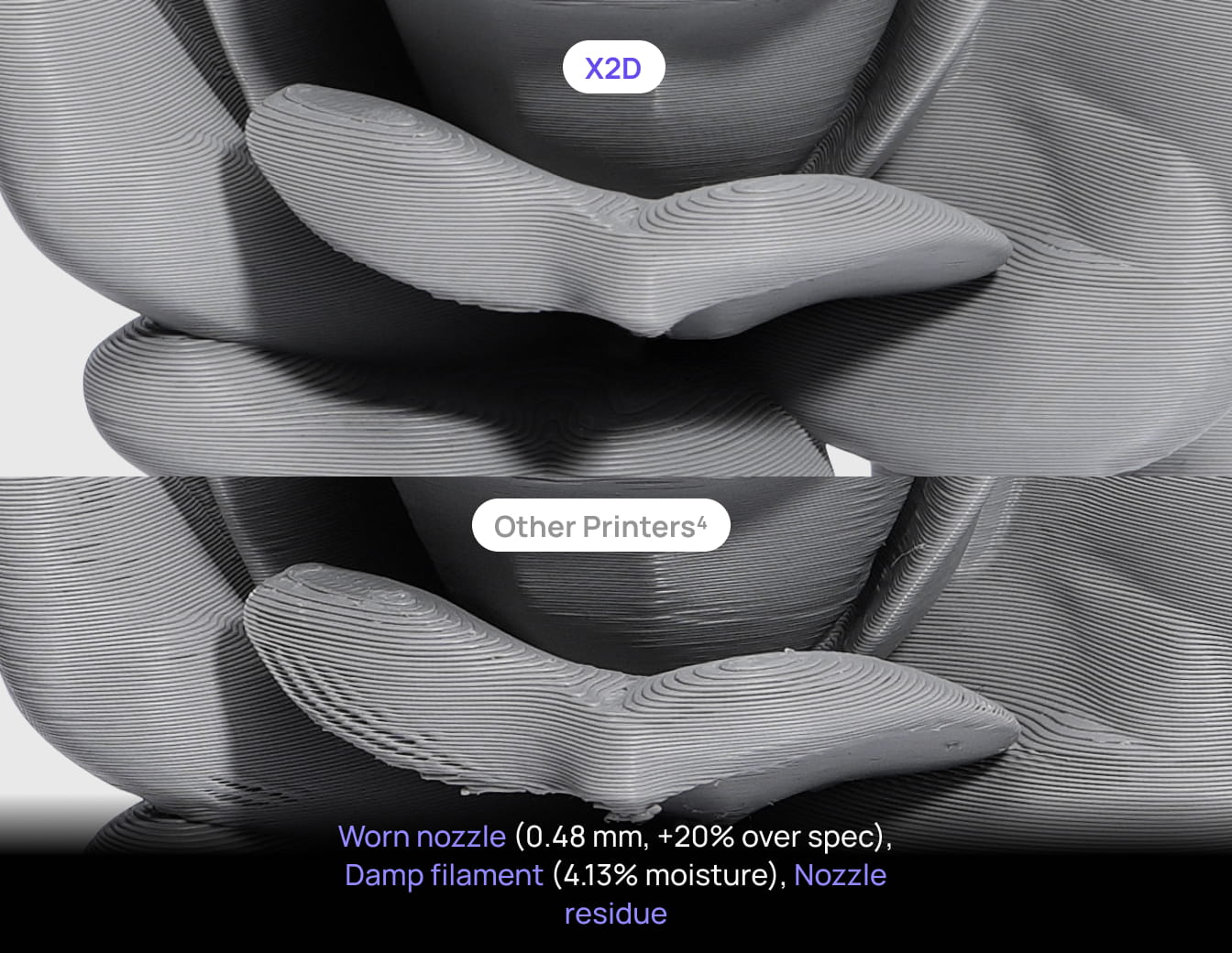
Flow Dynamics Calibration is designed to adapt to nozzle wear, material variation, and changing extrusion conditions. Instead of relying on a single K factor in every scenario, the X2D builds a time-varying, nonlinear model of the full extrusion system.
That allows the printer to detect, calibrate, and compensate for minor nozzle residue, gradual nozzle wear, and slightly damp filament. The result is more repeatable smooth surfaces and sharper edges instead of quality depending on chance.
The PMSM servo system addresses pressure fluctuations created when extruder gears grip and feed filament. Those small fluctuations can appear on printed surfaces as fine lines.
Exclusive to Bambu Lab, the PMSM servo system samples resistance and position at 20 kHz and adjusts electromagnetic torque in real time. That correction smooths micro-fluctuations before they affect extrusion at the nozzle.

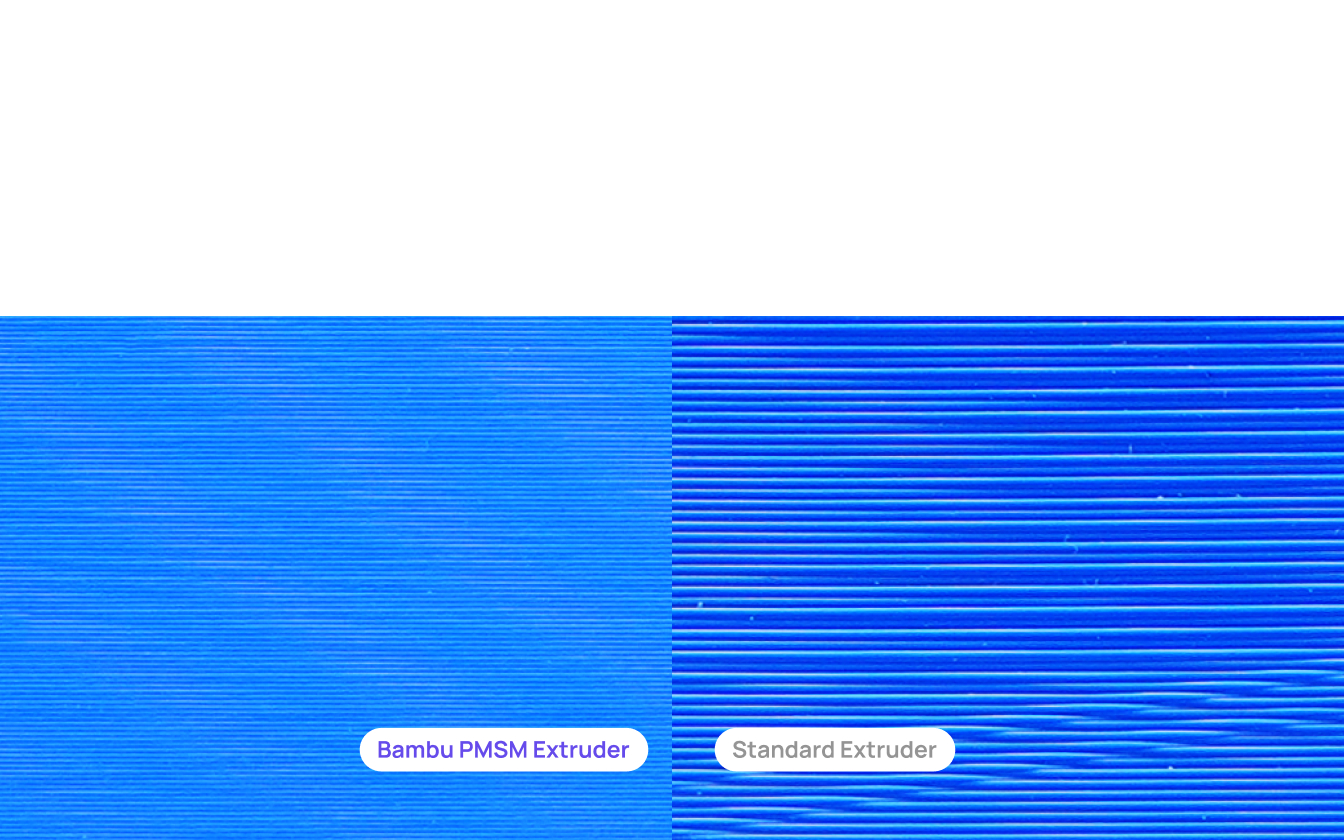
More precise control of extrusion pressure helps keep flow stable from layer to layer. Surface finish stays cleaner and more uniform across repeated prints.
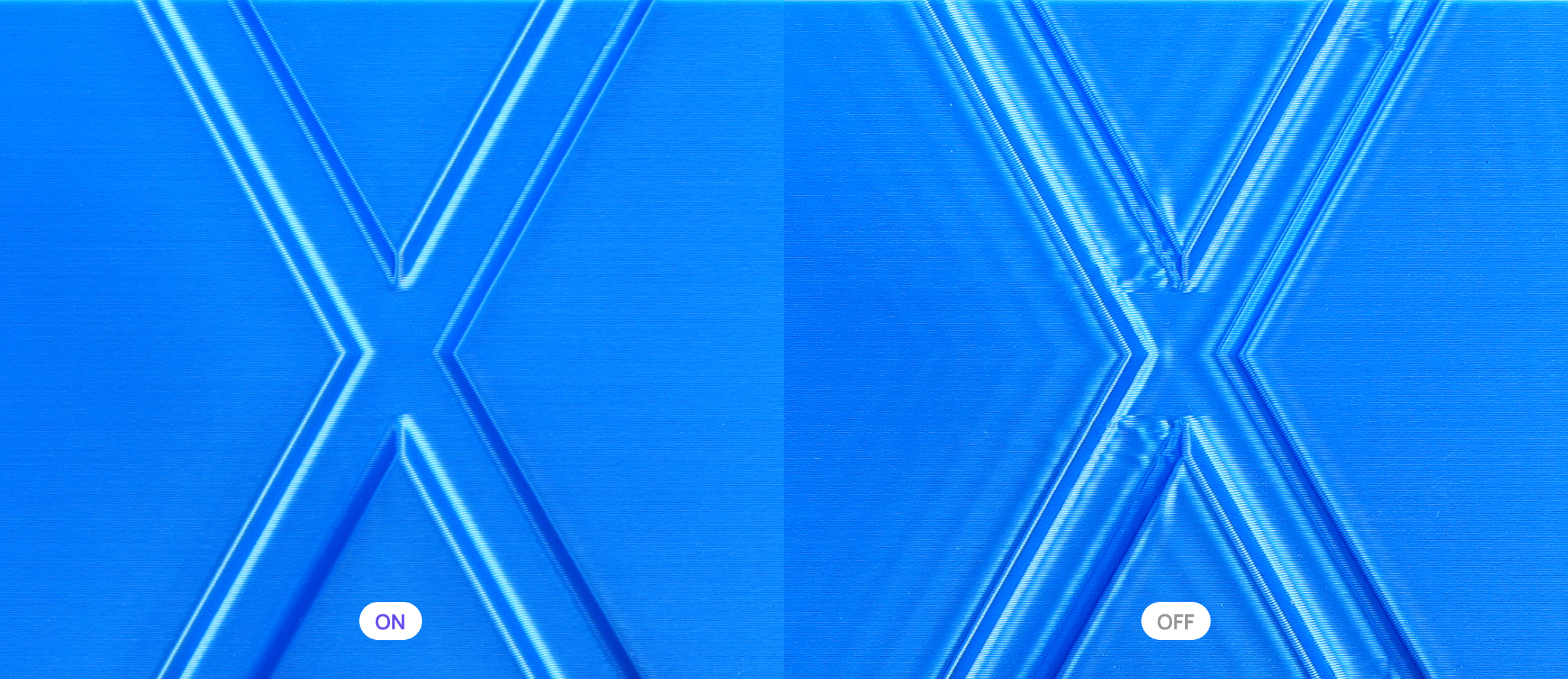
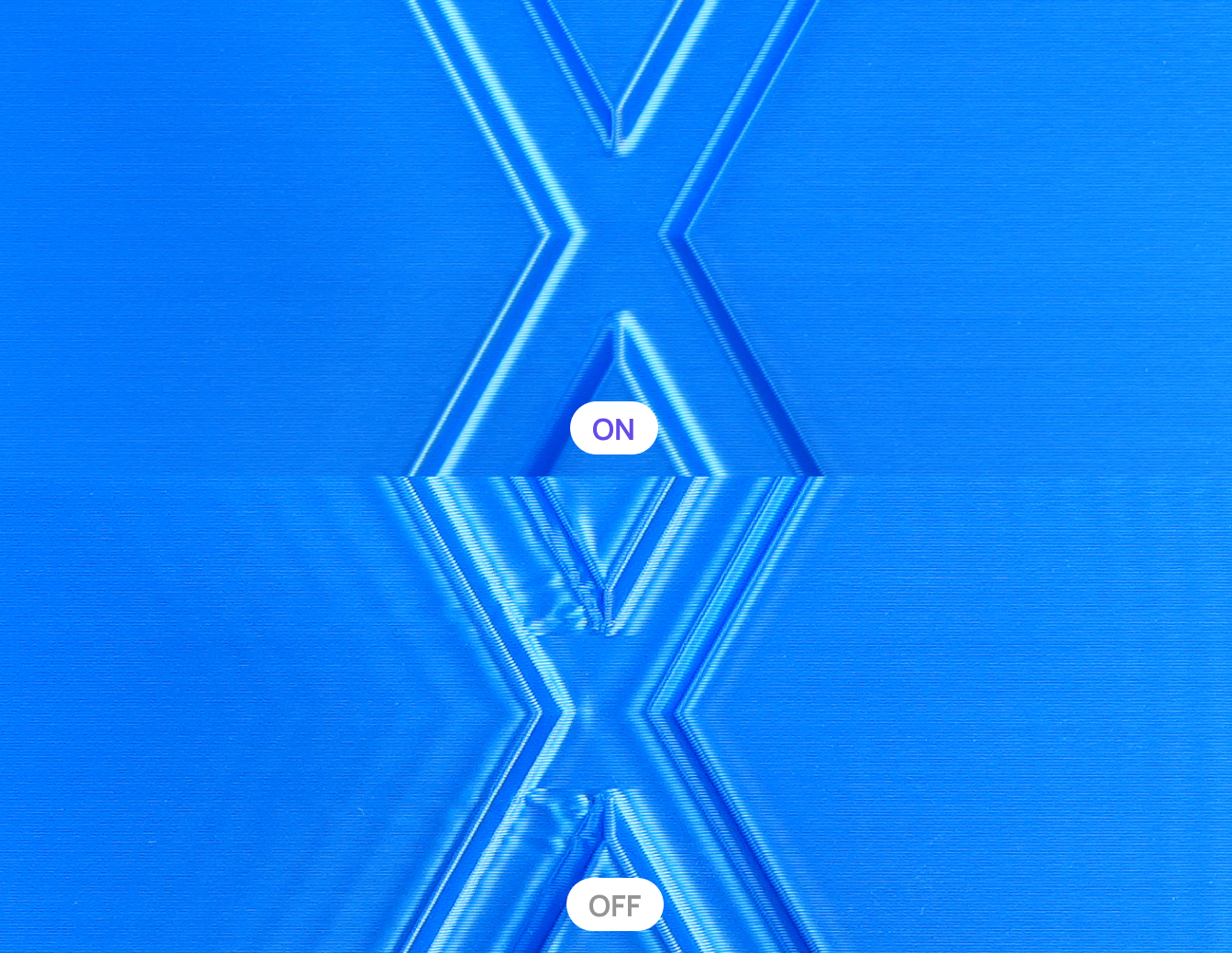
Active Vibration Compensation is built to reduce ringing and ghosting that can blur edges during fast motion. Real-time compensation helps corners stay sharp and details stay clean without forcing the printer to slow down unnecessarily.
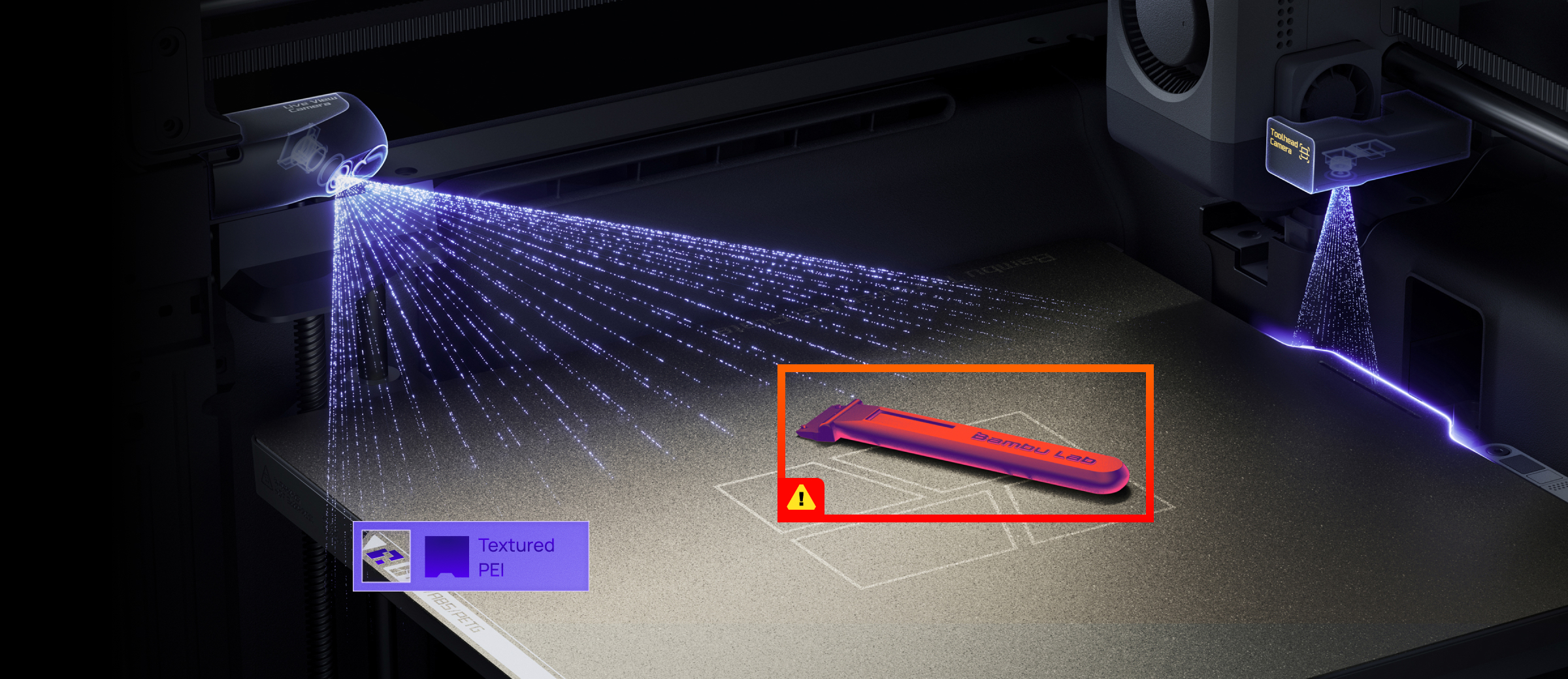
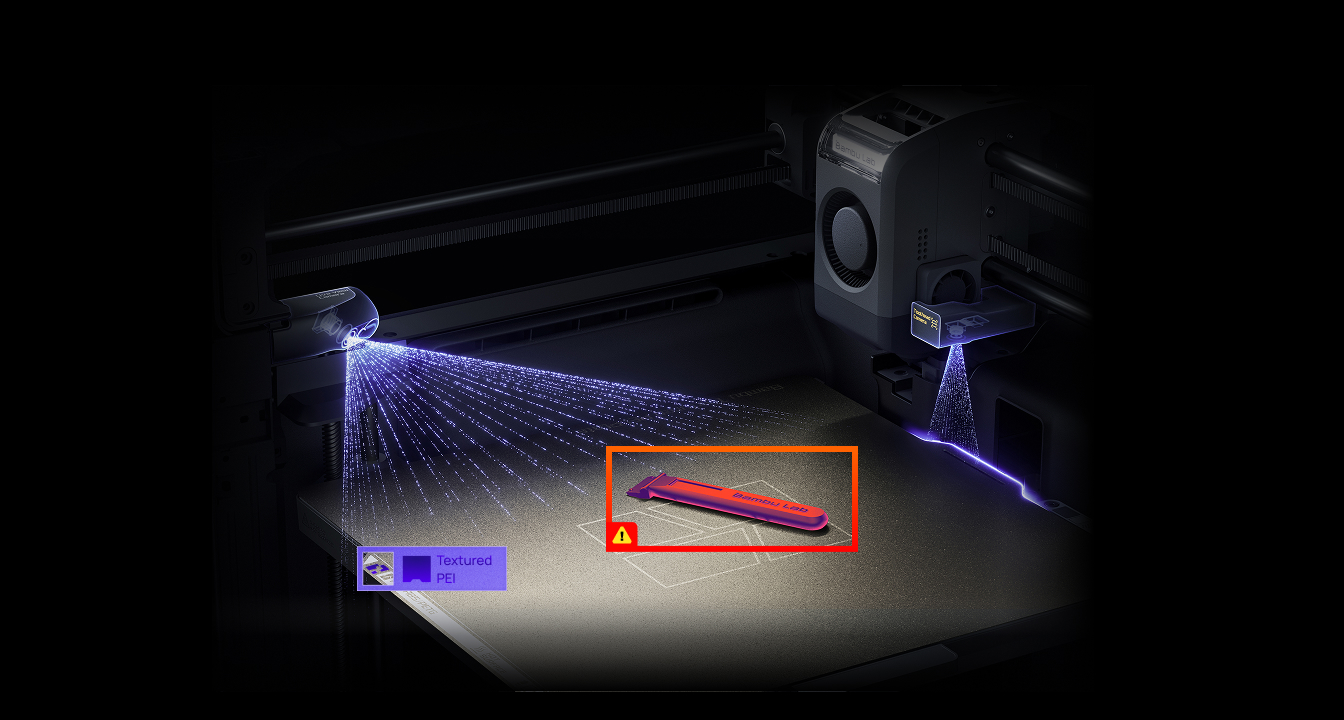
The Bambu Lab X2D includes an AI Liveview Camera and a Toolhead Camera to monitor critical stages of printing. Before a print starts, the cameras scan the build plate for debris and confirm that the plate is installed correctly.
During printing, the camera system watches for spaghetti failure, nozzle clumping, and purge-chute jams in real time. The printer can pause the job before more time and filament are lost.
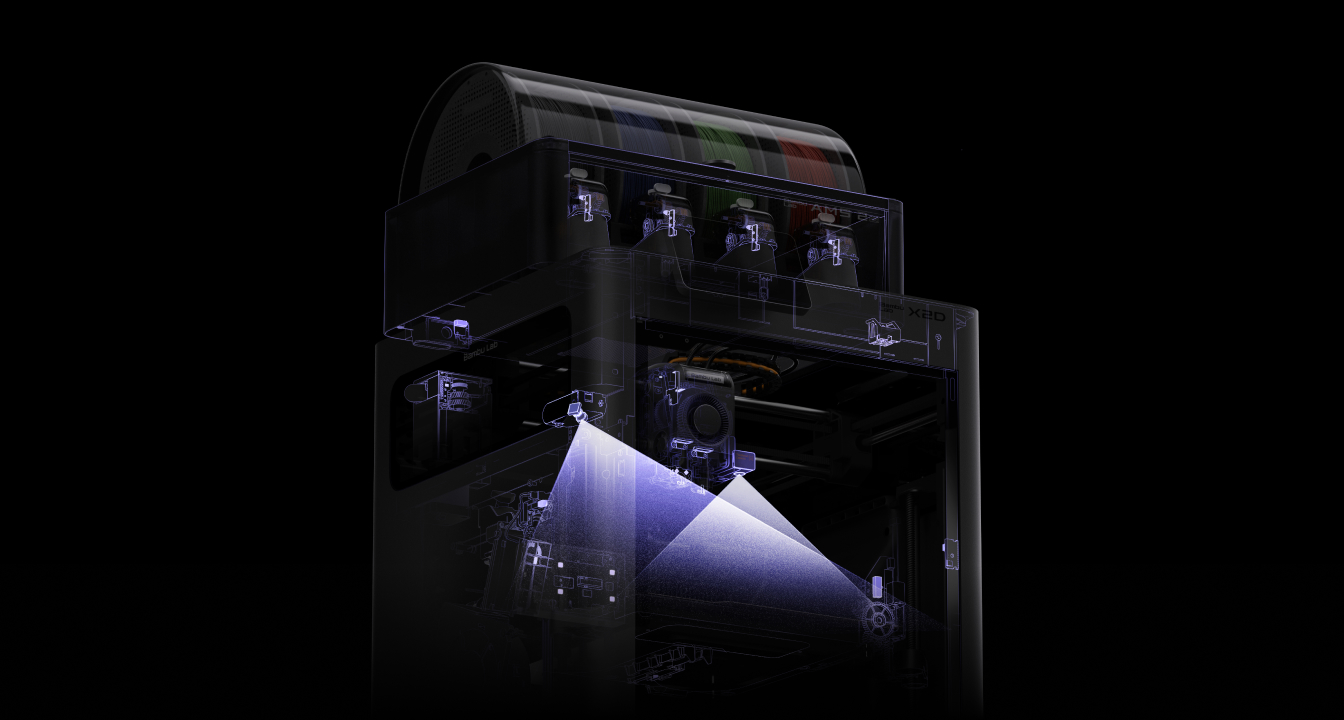
The X2D uses 31 sensors across the full system to observe the filament path, printing process, thermal environment, and machine safety in real time. The printer measures, checks, and responds to variables that affect print quality and system protection.
Filament Path Monitoring | Thermal Control 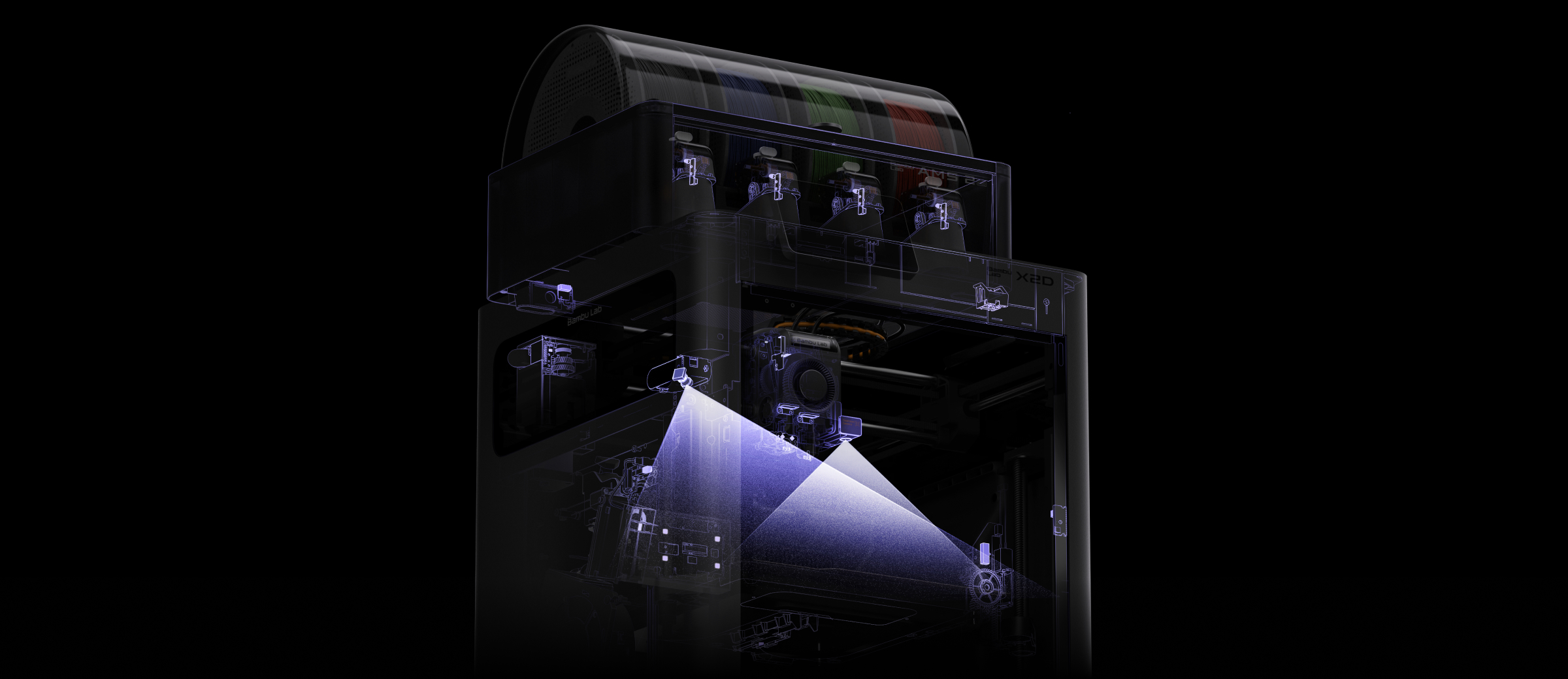
The printer runs a three-stage filtration system during every print. A G3 pre-filter, an H12 HEPA filter, and a coconut-shell activated carbon layer work together to reduce odours and airborne particles.
The same filtration approach used in H Series printers is designed for quiet, clean operation in everyday spaces.
The Bambu Lab X2D is UL 2904 certified for indoor air quality when printing with Bambu PLA Basic and PETG Basic. The certification confirms low particle and VOC emissions for those materials in personal spaces.
Tool-free nozzle swapping lets users change nozzles in seconds without extra tools. That simplifies routine maintenance and makes the system more approachable for first-time users.
Active Motor Noise Canceling and a noise-optimised air duct keep the X2D below 50 dB under typical conditions. That noise level supports quieter operation for overnight printing.
Improved chamber lighting makes Live View and time-lapse footage clearer, helping users inspect print progress remotely with better visibility.
The dual-nozzle system completed more than 1,000,000 switch cycles in life-cycle testing while maintaining smooth and consistent motion. That durability target supports long-term, dependable use.
The X2D is designed to print well on arrival and continue gaining features and performance updates over time. Major firmware updates are stated to arrive roughly every three months, delivering improvements directly to the machine.