
Vous possédez un compte ?
Connectez-vous pour payer plus vite.
19 les gens regardent ça en ce moment
🚚 Livraison gratuite sur les commandes de plus de 150 $ dans certaines villes
🔥 18 vendus cette semaine
📦 Retours sous 14 jours
Disponibilité: 178 en stock
Impossible de charger la disponibilité du service de retrait


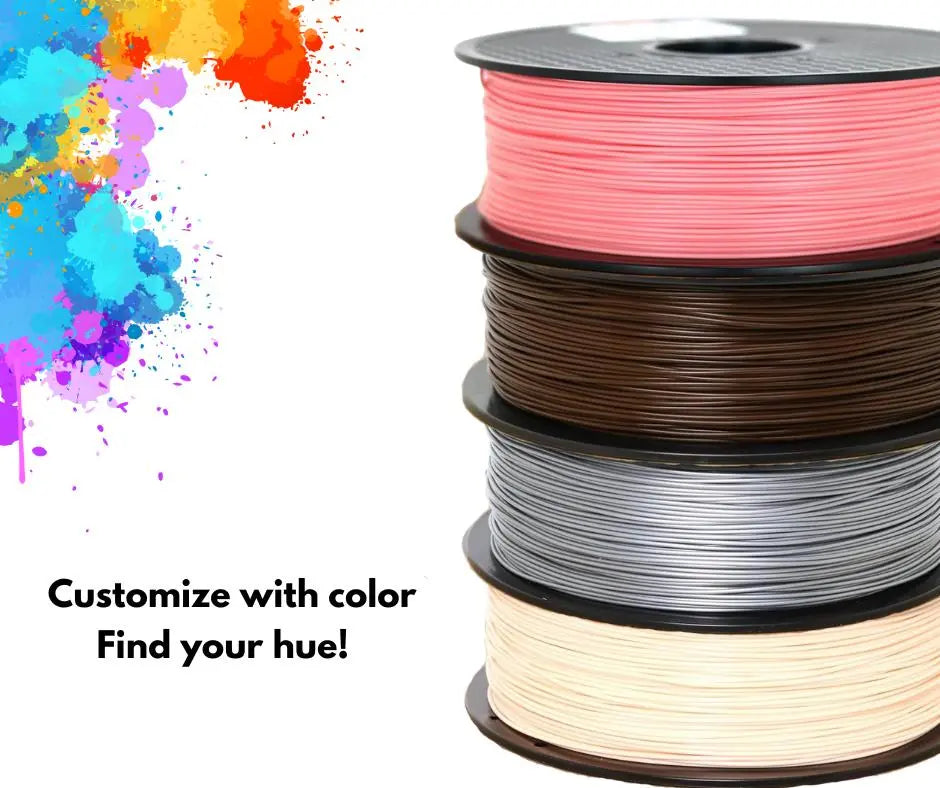
Le filament PLA Standard de 3D Printing Canada est conçu pour offrir des performances d’impression fiables, une régularité des couches fluide et une grande facilité d’impression sur une large gamme d’imprimantes 3D FDM et FFF de bureau. Idéal pour les amateurs, les makers, les éducateurs, les ingénieurs, les concepteurs de produits et les fermes d’impression, ce filament PLA de 1,75 mm offre des résultats fiables pour les utilisateurs débutants comme expérimentés.
Fabriqué à partir de résine PLA Revode 190 issue de matières végétales renouvelables, ce filament offre de faibles tendances au gauchissement, une forte adhérence au plateau et une qualité de surface propre. Que vous réalisiez des prototypes, des modèles éducatifs, des impressions décoratives, des accessoires de cosplay ou des pièces fonctionnelles, ce filament PLA est conçu pour offrir des performances d’impression stables et répétables.
Sa large compatibilité et ses propriétés matériau faciles à utiliser en font un choix polyvalent et fiable pour les flux de production additive quotidiens.
Le PLA est l’un des matériaux les plus utilisés en impression 3D de bureau en raison de ses réglages d’impression tolérants, de son comportement de refroidissement stable et de son adhérence fiable de la première couche.
Conçu pour une alimentation stable et un flux de matière fiable, ce filament aide à maintenir une qualité d’impression constante lors de travaux d’impression courts comme longs.
Le matériau produit des couches lisses et une reproduction nette des détails, adaptée aux impressions décoratives, aux prototypes et aux modèles d’exposition.
Une forte liaison de la première couche aide à réduire les impressions ratées et améliore la cohérence globale d’impression sur les surfaces d’impression courantes.
Le PLA offre des performances dimensionnelles stables avec un retrait minimal, ce qui aide à réduire le curling et la déformation pendant le refroidissement.
Produit à partir de ressources renouvelables, notamment le maïs et le manioc, le PLA offre une alternative plus respectueuse de l’environnement aux thermoplastiques à base de pétrole.
Ce filament convient à une large gamme de projets d’impression 3D, notamment :
Le PLA est reconnu pour son excellente imprimabilité et sa large compatibilité avec les imprimantes 3D de bureau grand public et professionnelles. Ce filament fonctionne de manière fiable avec les systèmes d’extrusion direct drive et Bowden tout en maintenant une extrusion stable et une adhérence fiable des couches.
Les faibles caractéristiques de retrait du matériau aident à minimiser le gauchissement et le relevage des bords, ce qui facilite l’obtention d’impressions réussies avec moins de réglages. Les ventilateurs de refroidissement sont recommandés pour améliorer les ponts, la qualité des surplombs et la reproduction des détails fins.
Ce filament peut être imprimé sur des plateaux chauffés ou non chauffés selon la configuration de l’imprimante et le choix de la surface d’impression.
Pour de meilleurs résultats et une constance d’impression à long terme, le filament doit être stocké dans un environnement sec, à l’aide d’un contenant hermétique ou d’une boîte de séchage pour filament avec dessiccant.
Compatible avec :
Souvent utilisé avec :
Les utilisateurs choisissent ce filament PLA Standard parce qu’il combine une qualité d’impression fiable, une configuration facile et une constance matériau fiable pour les applications d’impression quotidiennes. Son faible comportement au gauchissement et ses performances d’extrusion stables le rendent adapté aussi bien aux nouveaux utilisateurs qu’aux makers expérimentés travaillant sur des flux d’impression à grand volume.
Les principaux avantages comprennent :
Ses performances équilibrées et ses caractéristiques d’impression fiables en font un filament pratique au quotidien pour une large gamme d’applications d’impression FDM.
Que vous imprimiez des prototypes, des outils d’atelier, des modèles décoratifs ou des pièces de production, le filament PLA Standard de 3D Printing Canada offre des résultats constants et une qualité d’impression fiable pour votre prochain projet d’impression FDM.
| Nom du produit | Filament PLA standard |
| Marque | 3D Printing Canada |
| Matériau | PLA (acide polylactique) |
| Type de résine | Revode 190 |
| Diamètre du filament | 1,75 mm |
| Poids net | 1 kg |
| Origine du matériau | Matériaux végétaux renouvelables, y compris le maïs et le manioc |
| Température de buse recommandée | 190°C–220°C |
| Température du plateau recommandée | 50°C–60°C |
| Ventilateur de refroidissement | Recommandé |
| Compatibilité avec l’imprimante | La plupart des imprimantes 3D FDM/FFF de 1,75 mm |
| Aspect de surface | Lisse avec un léger brillant |
| Résistance au gauchissement | Caractéristiques de faible gauchissement |
| Dégradable | Oui |
Avis
Aucun avis pour le moment — soyez le premier à en laisser un.


