
Vous possédez un compte ?
Connectez-vous pour payer plus vite.
15 les gens regardent ça en ce moment
🚚 Livraison gratuite sur les commandes de plus de 150 $ dans certaines villes
🔥 18 vendus cette semaine
📦 Retours sous 14 jours
Disponibilité: Stock bas : 60 restant(s)
Impossible de charger la disponibilité du service de retrait


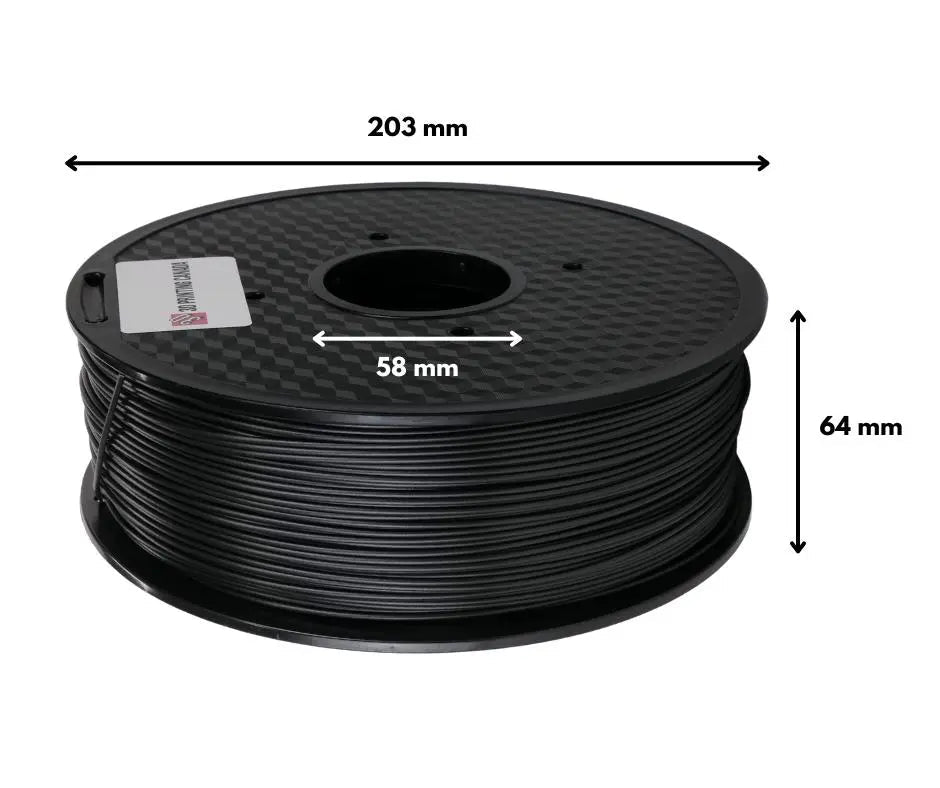
Le filament Standard PC+ est un mélange de polycarbonate haute résistance développé pour les makers, les ingénieurs, les hobbyistes avancés et les professionnels qui produisent des pièces fonctionnelles durables et des prototypes de qualité ingénierie. Conçu pour offrir une meilleure imprimabilité que les matériaux traditionnels en polycarbonate pur, le PC+ associe robustesse, résistance à la chaleur et forte adhérence entre les couches pour les applications exigeantes d'impression 3D FDM.
Ce filament PC+ de 1,75 mm est conçu pour une extrusion fiable, des performances mécaniques durables et une stabilité dimensionnelle, ce qui le rend idéal pour les projets orientés production, l'outillage, les supports, les boîtiers, la robotique et les applications structurelles.
Le PC+ est un excellent choix de matériau pour les utilisateurs qui ont besoin de pièces plus solides et plus résistantes à la température que celles que le PLA ou le PETG standard peuvent offrir.
Le PC+ est conçu pour des pièces fonctionnelles à haute résistance soumises à des contraintes mécaniques et à une utilisation répétée.
Offre une meilleure stabilité thermique que les matériaux grand public courants, ce qui le rend adapté aux environnements à température élevée.
Produit des composants robustes et durables, avec une meilleure résistance aux fissures et à la rupture fragile.
Une adhérence inter-couches fiable améliore l'intégrité structurelle et la durabilité globale des pièces.
Les mélanges PC+ sont généralement plus faciles à imprimer que les matériaux traditionnels en polycarbonate pur, tout en conservant d'excellentes propriétés mécaniques.
Le filament Standard PC+ est idéal pour :
Le PC+ est conçu pour les utilisateurs avancés d'imprimantes FDM de bureau qui recherchent des performances fonctionnelles élevées et une durabilité fiable.
Les principales caractéristiques du matériau incluent :
Par rapport au PLA et au PETG, le PC+ offre de meilleures performances structurelles et une meilleure résistance à la chaleur pour les applications exigeantes où la durabilité est essentielle.
Pour de meilleurs résultats, le PC+ doit être imprimé avec des températures de buse élevées, un plateau chauffant et un environnement d'impression stable. Les imprimantes fermées sont recommandées pour aider à réduire le gauchissement et améliorer la régularité d'impression lors des pièces de grande taille.
Un stockage approprié du filament est important, car les matériaux à base de polycarbonate peuvent absorber l'humidité de l'air, ce qui peut affecter la qualité d'extrusion et l'état de surface.
Ce filament PC+ de 1,75 mm est compatible avec les imprimantes 3D FDM/FFF capables de prendre en charge des matériaux de qualité ingénierie et des températures d'extrusion plus élevées.
Compatible avec de nombreuses plateformes d'imprimantes avancées, notamment :
Configuration d'imprimante recommandée :
Le PC+ est largement choisi par les makers avancés et les professionnels qui ont besoin de pièces plus solides et plus durables que celles que peuvent fournir les filaments grand public standard.
Les utilisateurs choisissent le PC+ pour :
Son équilibre entre résistance, stabilité thermique et meilleure imprimabilité fait du PC+ un choix populaire pour les ateliers, les équipes d'ingénierie et les environnements de fabrication avancés.
Que vous produisiez des prototypes d'ingénierie, des ensembles robotiques, de l'outillage d'atelier ou des composants de production durables, le Standard PC+ Filament 1.75mm offre la résistance, la tenue à la chaleur et les performances d'impression fiables requises pour l'impression 3D fonctionnelle avancée.
| Matériau | PC+ (mélange de polycarbonate) |
| Diamètre du filament | 1,75 mm |
| Poids net | 1 kg |
| Température de buse recommandée | 260°C – 300°C |
| Température du plateau recommandée | 90°C – 120°C |
| Ventilateur de refroidissement | Faible ou désactivé |
| Vitesse d’impression recommandée | 30 – 70 mm/s |
| Compatibilité avec l’imprimante | Imprimantes 3D FDM/FFF haute température 1,75 mm |
| Propriétés du matériau | Haute résistance, résistant à la chaleur, résistant aux chocs |
Avis
Aucun avis pour le moment — soyez le premier à en laisser un.


